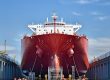
Crude oil tankers often carry different grades of oil in the same tanks, so it’s essential to wash them before loading new cargo. Previously, they were cleaned by seawater, but this method increased marine pollution and required bigger slop tanks to store leftover residue and oily water mixture.
For these reasons, the Crude Oil Washing (C.O.W.) system was introduced in the early 1970’s to the shipping industry. Crude oil washing was made mandatory under MARPOL Annex 1, Regulation 33, which states that every crude oil tanker, which is 20000 dwt and above, must be fitted with a cargo tank cleaning system using crude oil washing, for every cargo hold tank.
Highlights:
This course is designed to provide seafarers with essential knowledge on how to plan, carry out, and document Crude Oil Washing safely and efficiently.
By the end of this course, you will be able to:
- Understand the purpose and requirements of Crude Oil Washing (C.O.W.) operations.
- Identify the necessary content that should be included in the C.O.W. manual.
- Comprehend the actions implemented before, during and after C.O.W. operations.
- Identify the methods used for C.O.W.
- Understand the fundamentals of C.O.W. systems and equipment.
Legislation & References: This course is based on the following references:
- MARPOL Annex I (incl. Oil Record Book Part II)
- IMO Revised COW Specs (Res. A.446 as amended by A.897(21))
- SOLAS II-2
- ISGOTT 6th edition
- VOC Management Plan (MARPOL Annex VI Reg. 15)
- OCIMF SIRE 2.0
Duration: 1 hour.
Who should attend:
- This course is intended for deck and engine officers, cargo crew involved in line-ups and stripping, as well as shore staff, such as marine and cargo superintendents, DPA, HSQE, and vetting officers.
Certificate: ABS